Indirizzo: Via Giovanna Maria Dallari, 2 - 41049 Sassuolo (MO) Italy
Automotive Textiles Sector
AMR Case Study in the automotive textiles sector
Integration of AMR robots and industrial robotics in the automotive textile sector
In the automotive textile manufacturing sector, efficiency, traceability and operational continuity are critical factors for optimising internal logistics and materials handling.
In this case study, we explain how Errevi Automation designed and implemented an integrated solution based on AMR robots and industrial robotics.
In the automotive sector, speed, precision and operational continuity are key factors in optimising the internal logistics supply chain and improving the management of production flows.
In this case study, Errevi Automation presents an automotive automation project developed through the integration of AMR robots, automated handling systems and goods-to-person logistics for internal material handling.
The solution implemented has enabled the automation of internal automotive logistics operations, improving efficiency, operational safety and production continuity.
The customer's request
The company had two main objectives:
1. Automatic integration of production lines 2. Automation of the packaging and palletising process
Solution implemented for in-house automotive logistics
The solution developed by Errevi Automation integrates automotive automation and automated material handling systems to optimise internal production flow.
The process: from the automated warehouse to the end of the production line
The system designed by Errevi Automation is based on a fully integrated and automated process
1. Automated handling from the warehouse to the production line
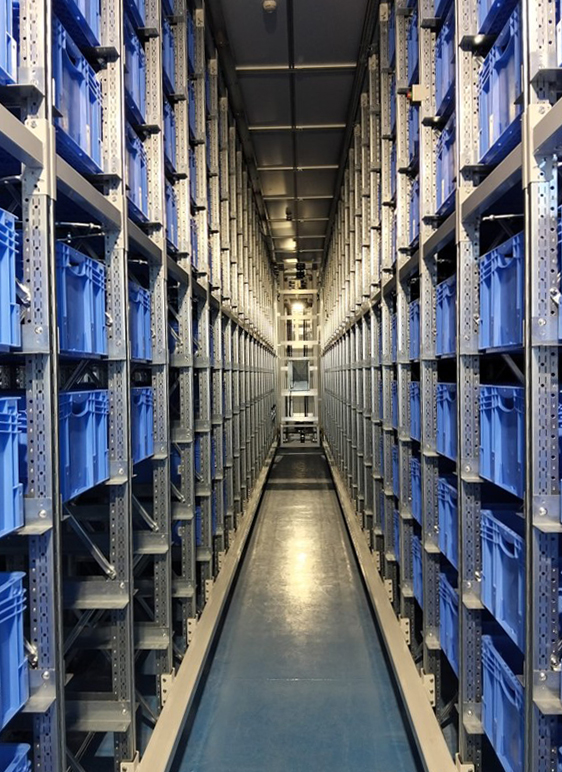
The process begins at the Titan automated warehouse, which is 5 metres high and can hold up to 600 crates. From there, Autonomous Mobile Robots collect the empty crates and take them directly to the production line.
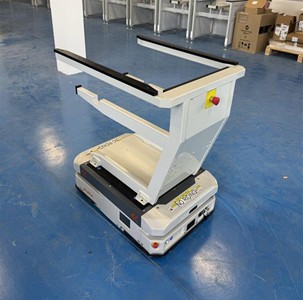
At this stage, the operator fills the crates with the semi-finished product coming off the production lines. Once ready, the crates are collected by the AMRs and transported automatically to the next stage, without any interruption to the flow.
The use of autonomous mobile robots (AMRs) helps to improve automated material handling and operational continuity in the automotive sector.
2. Handling and quality control using a goods-to-person system
In the finishing area, everything is designed to make the operator’s job easier: the trays are brought to the operator using a ‘goods-to-person’ system, minimising the need to move around and improving ergonomics.
Once the materials have been processed, the crates containing the finished product are automatically transported by the AMRs to quality control. The goods-to-person approach reduces the need for manual handling and optimises internal automotive logistics.
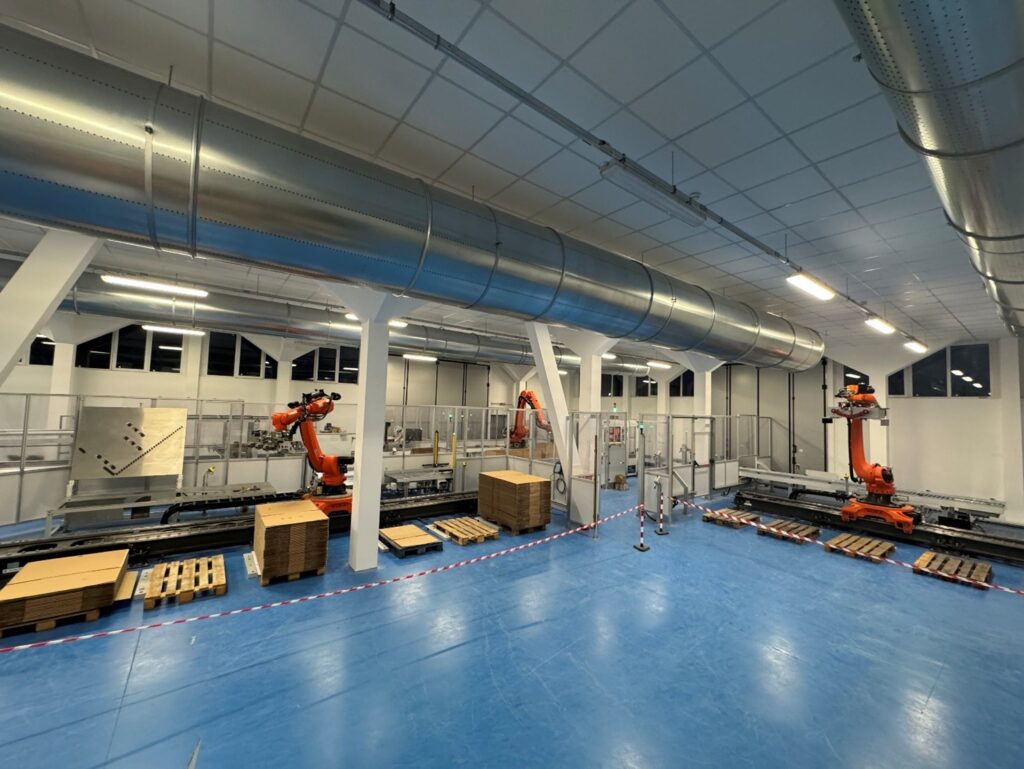
3. Robotic cell for packaging and palletising
Two humanoid robots operate in this area, performing the following tasks: – automatic carton forming; – automatic picking;
This area is also equipped with machinery for sealing cardboard boxes and automatic labelling.
4. The benefits of the automated solution
The integration of AMR robots, an automated warehouse and robotic handling systems has enabled the optimisation of internal material handling, improving the link between the warehouse, quality control, packaging and the end of the production line.
The solution helps to reduce manual tasks, streamline operational workflows and enhance the continuity of the production process, whilst maintaining high standards of traceability, safety and accuracy.
The key elements of the solution
This project demonstrates how the integration of AMR robots, automated material handling and industrial automation systems can improve efficiency, safety and production continuity in the automotive sector.
Errevi Automation’s solutions are designed to meet the intralogistics and automation needs of modern production facilities. The key factors behind this choice were:
Customisation
Every element has been custom-designed:
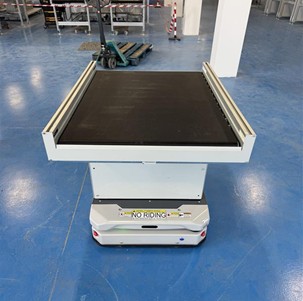
– AMRs with top modules specifically designed for load units – Docking stations adapted to load units and AMRs
Scalability
The system is designed to grow over time:
– Option to add AMR – Option to increase warehouse storage capacity
Operator safety
The introduction of goods-to-person automation has improved safety and operational efficiency, thanks to:
– reduced movement of staff – elimination of manual lifting of loads
Return on investment
Automation has replaced low-value-added manual tasks:
– handling – packaging – palletising
The result is a modest ROI that can be measured in the short term
Conclusions
The project demonstrates how the integration of AMR robots, automated warehouses and industrial robotics can transform production processes, making internal logistics more efficient, flexible and safe.
Errevi Automation develops bespoke solutions for companies looking to automate material handling and improve operational continuity within their facilities.